Why Elite Athletes Come Out of Retirement and Why It Often Disappoints
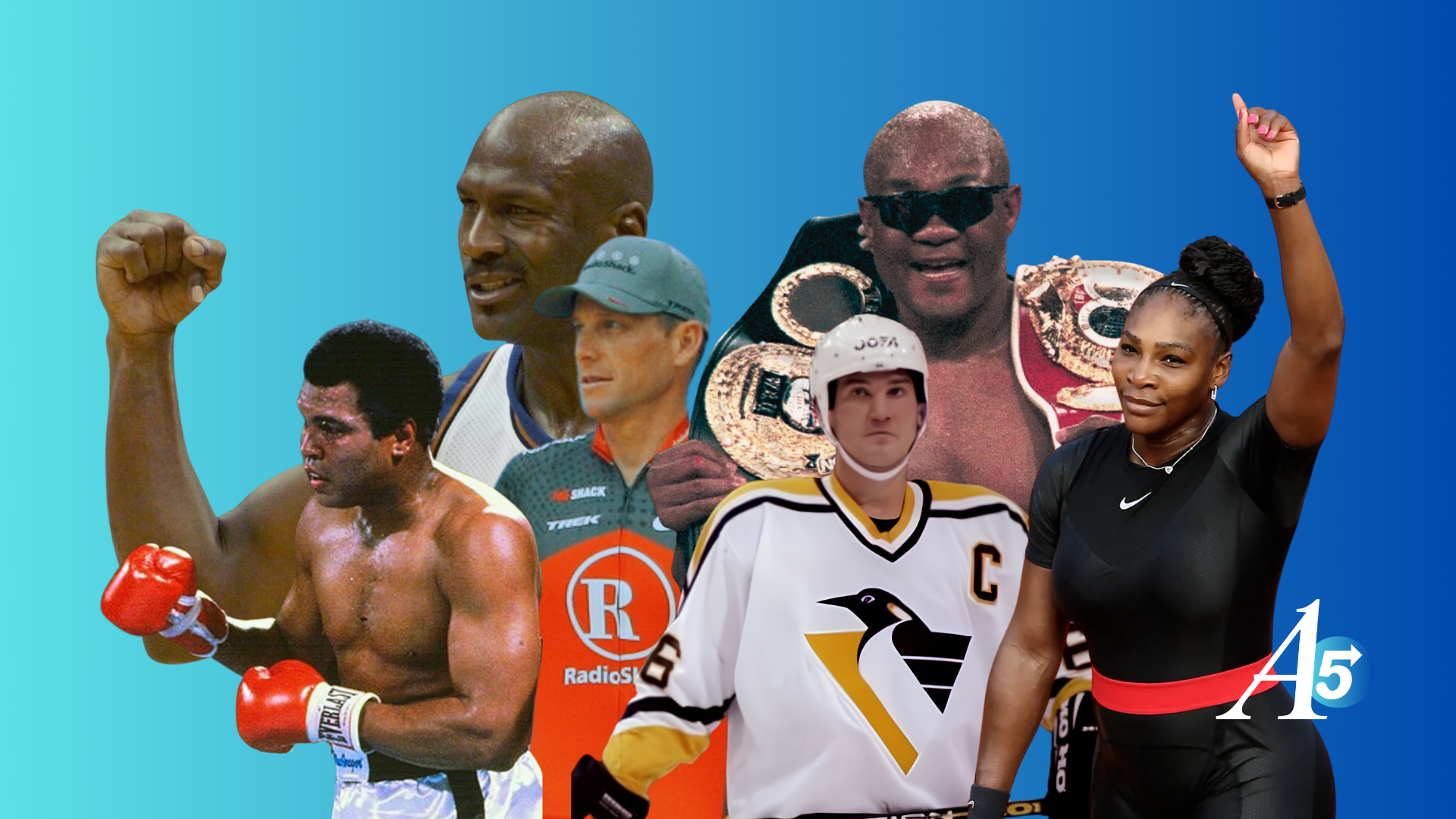
Retirement is supposed to be the finish line for professional athletes, but for many, it feels more like a cliff.
One day, everything is structured. Measured. Clear.
The next, there is silence.
No scoreboard.
No identity that people instantly recognize.
No daily proof that you are who you once were.
So they come back.
Not always because they believe they can still dominate.
But because something inside them is unresolved - an itch they cannot quite name.
And here is the hard truth most people avoid:
The comeback rarely feels the way they imagined it would.
9 Return Stories That Reveal What Is Really Going On
Michael Jordan
Jordan’s first retirement ended with another storybook return. Three more championships. A 72 win season. Total control.
That is the version everyone remembers.
MJ’s second comeback told a different truth.
When Jordan returned in 2001 with the Washington Wizards, he was 38 years old. He averaged 22.9 points per game in his first season back, which on paper looks impressive. But the Wizards went 37 and 45 and missed the playoffs.
The following season he played all 82 games, averaged 20 points, and the team still finished 37 and 45.
No titles. No deep runs. No storybook ending.
Just a legend trying to reconnect with something that was no longer there in the same way.
Muhammad Ali
Ali retired in 1979 as a global icon and three time heavyweight champion.
He came back in 1980 to fight Larry Holmes. He lost every round before his corner stopped the fight.
In 1981, he fought Trevor Berbick.
He lost again. Slower. Less sharp. Not the same man.
This was not a comeback for legacy.
It was a comeback for something internal.
And Ali would show the cost of chasing a version of yourself that no longer exists.
Lance Armstrong
Armstrong retired in 2005 after dominating cycling.
He returned in 2009 at age 37 with Team Astana.
He finished third in the Tour de France. A strong result, but not the dominance he craved.
In 2010 and 2011 with Team RadioShack, he failed to contend for the podium.
His final Tour appearance ended in 23rd place overall.
For someone who once defined the sport, that is a different reality.
His comeback was not about proving he was still the best, but one could argue it was about not being done with who he was when he raced.
Mario Lemieux
‘Super Mario’ retired in 1997 after battling cancer.
When he returned in 2000, he was still brilliant, scoring 76 points in just 43 games that season.
But the body never fully cooperated.
In his later years, injuries limited him. By his final season in 2005 and 2006, he played only 26 games and recorded 22 points before retiring for good.
Even for one of the most gifted players ever, the gap between what he once was and what he could now sustain was real.
George Foreman
Foreman is the exception people love to point to.
Retired in 1977. Came back in 1987.
Early in his return, he was written off. Too old. Too slow.
It took seven years before he got his title shot.
In 1994, at 45 years old, he knocked out Michael Moorer to become heavyweight champion.
But here is what gets missed.
He lost to Evander Holyfield. He lost to Tommy Morrison. He spent years grinding through fights that did not resemble his prime.
Still, his championship victory was very real, and should absolutely be celebrated for a fairytale script that defied all odds.
Brett Favre
Favre retired in 2008. Then came back. Then retired again. Then came back again.
His 2009 season with the Vikings looked like redemption. 33 touchdowns. 7 interceptions. A near Super Bowl run.
Then came 2010.
He threw 11 touchdowns and 19 interceptions. His body broke down. His streak of consecutive starts ended.
The final chapter was not heroic.
It was a reminder that the desire to keep going does not always align with what the body can deliver.
Michael Phelps
Phelps retired in 2012 saying he was done.
Then came 2014. A DUI. A sense that something was off.
He came back for Rio in 2016 and won five gold medals.
On the surface, this is a perfect comeback.
But listen closely to his own words from that period.
He was not chasing medals, he was trying to rebuild himself.
The comeback worked because it was not about returning to the past. It was about fixing something deeper.
Serena Williams
Serena stepped away in 2017.
When she returned in 2018, she made four Grand Slam finals between 2018 and 2019.
She lost all four.
Close. Painfully close. But not the same outcome as before.
This is where the emotional reality shows up.
Still elite. Still dangerous. Still capable of reaching the biggest stages.
But not quite the same finisher she once was.
Rob Gronkowski
Gronk retired in 2019, worn down physically.
He came back in 2020 to join Tom Brady in Tampa Bay.
He had 45 receptions, 623 yards, and 7 touchdowns that season.
He added 2 touchdowns in the Super Bowl.
A strong return.
But even here, the role had changed.
He was no longer the unstoppable force of his prime. He was part of something, not the center of it.
What These Comebacks Actually Reveal
If you step back, a pattern emerges.
Most of these athletes did not come back because they believed they would be better than before.
They came back because something felt incomplete.
They missed the clarity.
They missed the structure.
They missed knowing exactly who they were every single day.
And when that disappears, it creates something difficult to sit with.
Emptiness.
Not failure.
Not lack of success.
Emptiness.
One psychologist described retirement as feeling like a first death. Another described it as a Grand Canyon where meaning used to exist.
So the comeback becomes an attempt to fill that gap.
Which is why the experience often feels… off.
Not as fulfilling.
Not as sharp.
Not as complete as they imagined it would be.
And that is where the real realization begins.
The Real Question
Not “Can I come back?”
But “Why do I feel like I need to?”
Because if the answer is to escape that emptiness…
Then you are solving the wrong problem.
A Different Path Forward
This is where most athletes get stuck.
They think fulfillment only exists in the arena they already mastered. So they go back.
Even when part of them knows it will not feel the same.
What if the better question is this:
Where else could that same drive, that same identity, that same edge… actually expand your life instead of trying to recreate it?
That is the shift.
Not away from who you were, but into a version of yourself that is not limited to it.
Where Athlete5 Fits
Athlete5 is built for this exact moment.
Not to tell you not to come back.
But to help you understand what is actually driving that decision.
To separate the need for closure from the need for growth.
To take the discipline, the mindset, the identity that made you elite…
And apply it somewhere that creates a new peak, not a repeat of the old one.
Because the truth is simple, even if it is hard to accept.
You might be able to go back, but you will not find the same version of yourself waiting there.
The opportunity is not behind you.
It is in what you choose to build next.